What is P/E -vs- Forward P/E
P/E means Price to Earnings - one of the most important part in choosing a stock, not necessarily the price. And, yes there are several different types of Price to Earnings:

Let's take Microsoft,
Ticker Symbol: MSFT as an
example. Here is Microsoft's current Price to
Earnings:
MSFT's P/E: 37.03 -vs- MSFT's Forward P/E: 35.86
-
A Trailing P/E of 37.03 means the market is currently paying over $37 for every $1 Microsoft earned over the last year.
-
A Forward P/E of 35.86 indicates analysts expect higher earnings in the next 12 months - hence the slightly lower ratio.
In general, which P/E is more useful - is there one
that you should pay attention more to?
-
Use Trailing P/E if you want to see how the company has performed based on actual realized earnings.
-
Use Forward P/E if you're trying to judge future growth and value based on expected performance - what they think they're going to do in the upcoming year.
Forward P/E is better for ultimate decision making,
because it helps to show what a growth sector
company and stock may be doing: Growing.
It is imperative to look always for and at both numbers.
What do the P/E numbers Mean - Can they Be too high?
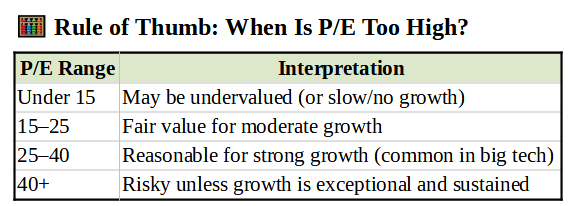
Which P/E is More Useful?
-
Use Forward P/E if you are trying to judge future growth and value based on expected performance. It is especially important for growth companies like Microsoft.
-
Use Trailing P/E if you want to see how the company has performed based on actual realized earnings.
Here is the Important Part: As you are looking at buying a new stock, you will have both P/E's there as you are researching, and you will want to see that the Forward P/E is likely lower than the Trailing P/E. (Remember, sometimes that P/E is called Trailing P/E). This will show that hopefully the stock price is going up.